
-
Shop by category
Explore all dealsExplore this collection for more finds.
View this find
- Amazon Best Sellers
- Under $25
-
Shop by brand
View all brandsExplore this collection for more finds.
View this find
-
eDeals & offers
Explore all dealsExplore this collection for more finds.
View this find
- Shopping guides
- Compare products Free tool
-
Shop by category
Explore all dealsExplore this collection for more finds.
View this find
- Amazon Best Sellers
- Under $25
-
Shop by brand
View all brandsExplore this collection for more finds.
View this find
-
eDeals & offers
Explore all dealsExplore this collection for more finds.
View this find
- Shopping guides
- Compare products Free tool
THE EVERYDAY EDITKitchen & Dining
Moving Kitchens: Make a Cutlery-Drawer Inventory Before You Pack
A practical packing workflow for counting drawer cutlery, setting aside first-meal essentials, labeling boxes clearly and reconciling the inventory after a move.
Explore the picks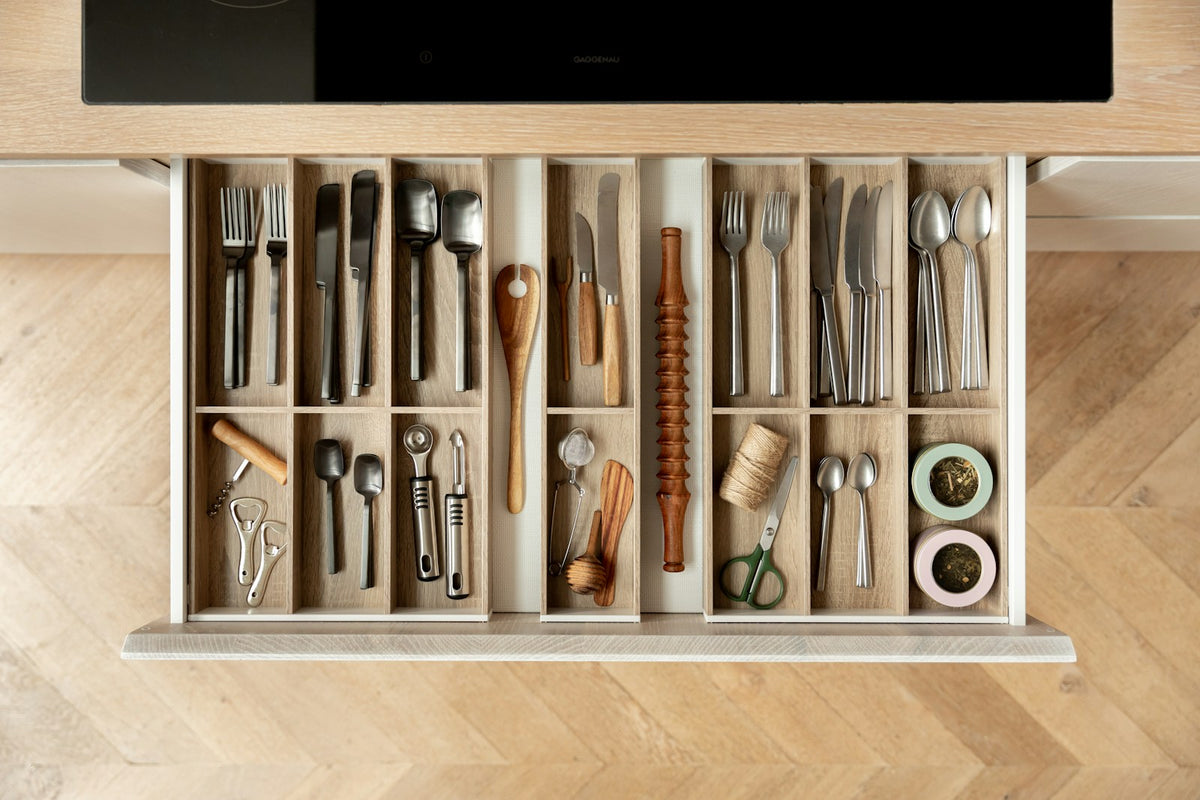
A kitchen box marked “kitchen” may contain anything from teaspoons to serving utensils—and opening several boxes to find a fork can make the first meal in a new home harder than it needs to be. Before packing the cutlery drawer, make a short inventory and use it to guide what stays accessible, what goes in each box and what to check after unpacking. Treat the list as a record of what you own, not as proof that an organizer is meant to travel with its contents.
Ad · We may earn a commission. As an Amazon Associate I earn from qualifying purchases.
Start with a count, not the drawer compartments
Empty the drawer onto a clear surface and record utensils by type. For example, write down the counts for everyday forks, teaspoons, serving spoons and any other distinct items. If you notice a missing or unusually large utensil, note that separately rather than assuming the drawer represents a complete set. This gives you a baseline that is useful even if the items are repacked differently at the new home.
Decide what must be easy to reach first
Use your first meals after the move to choose a small set of items for immediate access; do not let the number of organizer compartments dictate the set. If dinner on the first night needs two forks and a serving spoon, put those on a short first-night list. Pack the rest separately if that suits your plan. The decision is about what your household will use soon, not about preserving a particular drawer layout.
Make each box label useful during unpacking
Add the contents and access priority to the label instead of relying on a room name alone. A box holding the first-night utensils could say “Kitchen—everyday cutlery—open first.” Another box containing serving utensils for later could be labeled “Kitchen—serving utensils—open later.” This makes the box easier to identify when several containers are stacked together and avoids having to remember which one was packed first.
Close the loop with a count at the new home
When unpacking, compare what you find with the original counts and mark each category as checked. If your list records eight teaspoons but you unpack seven, note the discrepancy and look through the relevant boxes before deciding anything needs replacing. An empty drawer is not evidence that an item was lost; it may still be packed under a different label.
Before you decide
- Count and record utensils by type before packing.
- Write a separate list of items needed for the first meals.
- Label boxes with cutlery contents and access priority.
- Reconcile unpacked counts before considering replacements.
A relevant item to explore

madesmart Classic 6 Compartment Silverware Tray, White
The madesmart Classic tray is described as a six-compartment silverware and utensil organizer measuring 16 × 12.9 × 1.88 inches. It can be an example of a drawer setup to inventory before a move; the supplied information does not establish that the tray is designed for transport or packing.
View the exact item and current retailer offer →
Check the exact variant, seller, included pieces, care instructions and current terms. Purchases and checkout take place with the retailer.
Common questions
Should I write individual utensil counts on the outside of a box?
Use the label to identify the contents and access priority, such as “everyday cutlery—open first.” Keep detailed counts on your inventory so the outside label stays quick to scan.
What if the cutlery is split between more than one box?
Record which categories went into each box, then label each one accordingly. For instance, identify the box with first-meal utensils separately from one holding serving pieces packed for later.
Explore this subject
Prepared by Biz E-Deals using product listing information and general shopping considerations. We have not personally tested the item. Listing information can change; confirm details with the retailer.
Lifestyle context photo: Photo by Orgalux on Unsplash. The pictured setting and items illustrate the topic; exact featured products are shown separately in this guide.
Your next useful read
Explore shopping guides →
Kitchen & Dining
Plan a Shared Household Fix-It Drawer Before You Stock It
Decide which small household fixes a shared drawer should support, sort supplies by recognizable tasks, and set a simple return routine before choo...
Read the guide
Kitchen & Dining
How to Coordinate a Shared Dish-Drying Station
A practical household routine for agreeing when dishes are ready, loading around the next person’s needs, giving small items a default place, and m...
Read the guide
Kitchen & Dining
A Smoother Baking Prep Station: Keep Scoops and Ingredients Together
A small change to where baking ingredients and measuring tools live can make recipe prep easier to resume. Build a dedicated baking zone, check how...
Read the guideThe Biz E-Deals edit
Good finds. A little less searching.
Choose your email topics, start with our welcome guide, and join the list for upcoming curated editions.
Savings explained
More to discover
Choose my emails
Choose your email topics on the next page, then confirm in your inbox. Free and optional. No account needed. Privacy policy