
-
Shop by category
Explore all dealsExplore this collection for more finds.
View this find
- Amazon Best Sellers
- Under $25
-
Shop by brand
View all brandsExplore this collection for more finds.
View this find
-
eDeals & offers
Explore all dealsExplore this collection for more finds.
View this find
- Shopping guides
- Compare products Free tool
-
Shop by category
Explore all dealsExplore this collection for more finds.
View this find
- Amazon Best Sellers
- Under $25
-
Shop by brand
View all brandsExplore this collection for more finds.
View this find
-
eDeals & offers
Explore all dealsExplore this collection for more finds.
View this find
- Shopping guides
- Compare products Free tool
THE EVERYDAY EDITBed & Bath
Replacing One Bedding Piece: Build a Compatibility Checklist Before You Shop
A practical workflow for documenting the bedding you’re keeping, comparing a possible replacement, and deciding whether a partial or complete replacement makes more sense.
Explore the picks
When one comforter or pillow sham needs replacing, it’s easy to start browsing and hope a similar-looking option will work. A better first step is to make a compact reference record of the piece you’re keeping. That turns a vague search into a specific task—and helps you see when matching one item may be less practical than replacing the set.
Ad · We may earn a commission. As an Amazon Associate I earn from qualifying purchases.
1. Define the replacement job
Start with the item that is actually worn, missing, or no longer usable. Write down whether you need a comforter, one sham, or more than one piece. This prevents a small repair to the bedding setup from automatically becoming a search for another complete set.
For example, if one sham is worn but the comforter and other sham are still in use, label the task “one sham replacement.” Note any practical constraint too, such as needing to keep using the comforter while you search. That context helps you judge whether a partial match is acceptable rather than treating perfect coordination as the only outcome.
2. Record what will stay
Make a reference card using the actual retained items, not a remembered size name or a guess based on appearance. Measure the comforter and each sham separately, and record any manufacturer or care-label details that are present. Keep the numbers attached to the item they describe: a comforter measurement is not a substitute for a sham measurement.
If labels are missing, write “not found” rather than filling the gap with an assumption. Add a short visual description of the side you usually display, including the main colors and any pattern. This gives you a useful record even if the retained pieces don’t share an easily found product name.
3. Compare the candidate item by item
Use the reference card to consider each relevant detail independently: intended piece, measurements, label information, and visible design. A shared color or broad size label alone does not establish compatibility. Decide in advance which differences you can live with—for instance, whether a close color match is enough if the texture or pattern differs.
The Homelike Moment set is a useful example of why this separation matters: its description identifies a comforter and two pillow shams and describes a reversible gray and light gray design. Compare the side you want visible with the retained piece. The description gives inconsistent size information, so it is not a sound basis for identifying the size of an individual item; rely on the actual label and measurements of the bedding you own.
4. Decide whether to replace one piece or the set
After comparing, ask whether the partial replacement is identifiable and whether its likely differences are acceptable in your room. Don’t assume a set’s pieces are sold separately or that similarly described items will match. If you cannot establish a plausible match from the information available, weigh the inconvenience of continuing to look against the possibility that a complete replacement is the more workable route.
For the worn-sham example, keeping the rest of the bedding makes sense if you find a separately available sham whose measurements and appearance suit the retained pieces. If you can’t identify one, a complete-set search may be more practical—but that is a choice based on your reference record, not a reason to discard usable bedding automatically.
Before you decide
- Name the exact item to replace.
- Measure each retained piece separately.
- Copy available labels and note missing information.
- Describe the displayed color and pattern.
- Compare the candidate with the record before choosing partial or complete replacement.
A relevant item to explore
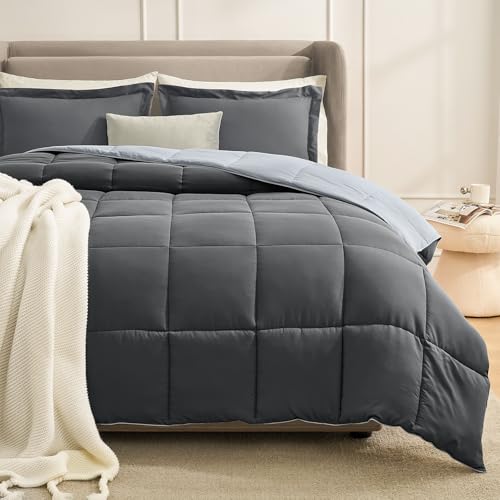
Homelike Moment Queen Comforter Set 3 Piece, Lightweight Soft Bed Sets
The Homelike Moment set offers a concrete example of the information a set description may provide: listed pieces and a reversible gray/light gray design. Its size wording is inconsistent, so the article uses the owner’s actual labels and measurements as the reference instead of treating the description as definitive.
View the exact item and current retailer offer →
Check the exact variant, seller, included pieces, care instructions and current terms. Purchases and checkout take place with the retailer.
Common questions
How should I save the reference card for future replacements?
Keep the measurements, label notes, and a photo of the retained pieces together in one note or folder. Identify which measurements belong to which item so the record remains useful if you revisit it later.
What if the retained pieces look different under different lighting?
Record the color in the room where the bedding is usually used, and note that lighting can change how a color appears. Treat a written color description as a search aid, not proof that two fabrics will match.
Explore this subject
Prepared by Biz E-Deals using product listing information and general shopping considerations. We have not personally tested the item. Listing information can change; confirm details with the retailer.
Lifestyle context photo: Photo by Mariah Krafft on Unsplash. The pictured setting and items illustrate the topic; exact featured products are shown separately in this guide.
Your next useful read
Explore shopping guides →
Bed & Bath
Shared Beds, Clear Assignments: Build a Bedding Inventory
A practical way to map beds, assign bedding sets, track individual pieces, and turn household gaps into a focused purchase plan.
Read the guide
Bed & Bath
Build a Bedroom Color Plan Around Navy Bedding
A practical guide to deciding whether navy bedding can anchor a bedroom’s existing colors, textures and future changes.
Read the guide
Bed & Bath
How to Set Up a New Bed-in-a-Bag Without Guesswork
A practical sequence for unpacking a compressed comforter set, checking its pieces and fit, and getting the bed ready for its first use.
Read the guideThe Biz E-Deals edit
Good finds. A little less searching.
Choose your email topics, start with our welcome guide, and join the list for upcoming curated editions.
Savings explained
More to discover
Choose my emails
Choose your email topics on the next page, then confirm in your inbox. Free and optional. No account needed. Privacy policy