
-
Shop by category
Explore all dealsExplore this collection for more finds.
View this find
- Amazon Best Sellers
- Under $25
-
Shop by brand
View all brandsExplore this collection for more finds.
View this find
-
eDeals & offers
Explore all dealsExplore this collection for more finds.
View this find
- Shopping guides
- Compare products Free tool
-
Shop by category
Explore all dealsExplore this collection for more finds.
View this find
- Amazon Best Sellers
- Under $25
-
Shop by brand
View all brandsExplore this collection for more finds.
View this find
-
eDeals & offers
Explore all dealsExplore this collection for more finds.
View this find
- Shopping guides
- Compare products Free tool
THE EVERYDAY EDITBed & Bath
Shared Beds, Clear Assignments: Build a Bedding Inventory
A practical way to map beds, assign bedding sets, track individual pieces, and turn household gaps into a focused purchase plan.
Explore the picks
When several people handle laundry, bed changes, or shopping, “the gray set” is not a reliable assignment. A useful household bedding record connects each bed to its size, the set intended for it, and the pieces actually available. The trade-off is between a record detailed enough to prevent mix-ups and one simple enough that everyone will keep using it.
Ad · We may earn a commission. As an Amazon Associate I earn from qualifying purchases.
Choose a bed-first or set-first inventory
A bed-first list is easiest when the household’s main question is, “What does this bed need?” Write down each room, bed, and required size, then leave space for its assigned set. A set-first list can work better when you are sorting a laundry pile: record each set and decide which bed it belongs to afterward. The trade-off is convenience versus clarity. For a household with a guest bed and a child’s bed, start bed-first so a set does not end up assigned simply because it was the first one unfolded.
Preserve the label when sizes have more than one name
Use the product’s stated size in the record instead of relying only on a household nickname. That helps when people say “the big bed” but listings use labels such as Full/Queen. For example, the Leonora listing describes a Full/Queen comforter measuring 90 by 90 inches. Record that label and measurement alongside the intended bed rather than silently translating it to “queen.” The trade-off: a little more detail in the inventory can prevent a vague size label from becoming a mistaken assignment.
Count pieces, not just sets
Treat each comforter and sham as a separate inventory item. Otherwise, “one set” can hide the fact that a component is elsewhere or that the household only needs a replacement piece. The Leonora listing says its set includes one comforter and two pillow shams; that is a useful example of what to enter, not evidence that those items are already in your home. If the guest bed’s record shows its comforter but only one sham, note that specific gap rather than marking the whole bed simply “missing bedding.”
Make purchases answer a named gap
Before shopping, describe the need in one line: which bed, which size, and which component or combination is missing. Then compare that need with what a proposed set is described as including. If an unassigned bed needs a Full/Queen comforter and two shams, a listing that states those dimensions and pieces may be relevant. If the actual need is one sham, the same set may add pieces the household does not need. The trade-off is buying a bundled solution versus addressing a single missing item; the inventory makes that difference visible before a purchase.
Before you decide
- List every bed and its required size.
- Assign each set to one bed in the shared record.
- Count comforters and shams separately.
- Write down the specific gap before shopping.
A relevant item to explore
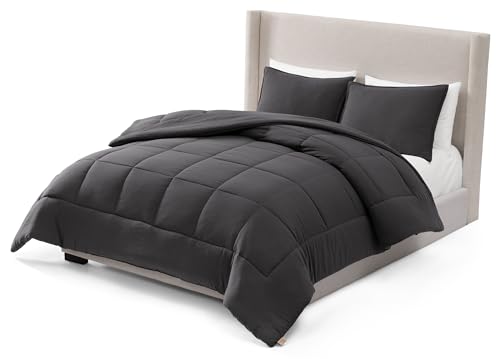
UGG Leonora Queen Comforter Set, Lightweight, 3-Piece, Charcoal Gray
The UGG Leonora listing is relevant as a concrete example of recording a stated size, comforter dimensions, and included shams. Its description identifies a Full/Queen comforter and two shams; it does not establish whether that set suits a particular bed or fills a household’s actual gap.
View the exact item and current retailer offer →
Check the exact variant, seller, included pieces, care instructions and current terms. Purchases and checkout take place with the retailer.
Common questions
Where should the household keep the inventory?
Choose a place everyone involved in laundry and bed changes can access, such as a shared digital note or a printed page in a common household folder. The best format is the one people will update.
How can we keep the record useful after bedding moves between rooms?
Treat a move as an inventory update: change the set’s assigned bed when it moves, and note any pieces that remain elsewhere. That keeps the record aligned with the household’s current setup rather than its original plan.
Explore this subject
Prepared by Biz E-Deals using product listing information and general shopping considerations. We have not personally tested the item. Listing information can change; confirm details with the retailer.
Lifestyle context photo: Photo by Amber Jacqueline on Unsplash. The pictured setting and items illustrate the topic; exact featured products are shown separately in this guide.
Your next useful read
Explore shopping guides →
Bed & Bath
Build a Bedroom Color Plan Around Navy Bedding
A practical guide to deciding whether navy bedding can anchor a bedroom’s existing colors, textures and future changes.
Read the guide
Bed & Bath
How to Set Up a New Bed-in-a-Bag Without Guesswork
A practical sequence for unpacking a compressed comforter set, checking its pieces and fit, and getting the bed ready for its first use.
Read the guide
Bed & Bath
How to Fit a Duvet Insert Without Losing Track of the Corners
A practical sequence for checking duvet-cover compatibility, aligning an insert, using attachment points when available, and planning care before m...
Read the guideThe Biz E-Deals edit
Good finds. A little less searching.
Choose your email topics, start with our welcome guide, and join the list for upcoming curated editions.
Savings explained
More to discover
Choose my emails
Choose your email topics on the next page, then confirm in your inbox. Free and optional. No account needed. Privacy policy